Wednesday, May 30, 2012

Books and Maps Donated to SRAC

June Smith-Williams (left) and SRAC's Janet Andrus
hold one of the books recently donated to SRAC

SRAC wants to thank June Smith-Williams who recently donated a great book and map collection to us. The books were donated in loving memory of June's father - Alden Harold Smith (1914 - 2010) of Beaver Dams, NY who loved books especially about the American West. He also collected arrowheads and Indian artifacts, many that he found when he plowed the family's farm fields as a boy with his horse drawn plow.

Many of the books have been added to the SRAC book lending library that is available for current members to sign out. The library currently has books for kids and adults and range from many topics to include geology, archaeology, history and even fossils and sea shells.


Saturday, May 26, 2012

Donate an Item to Our Tag Sale

We need your help!

SRAC is looking for donations of items large and small for a tag sale to take place on Thursday, June 14th, with a rain date of Friday, June 15th.

We are looking for household items, furniture, antiques, computers, appliances that we can sell to help fund our efforts at SRAC.

SRAC is dedicated to education, research and preservation of the region's archaeological and historical assets for the communities within the Twin Tier Region of Southeastern NY and Northeastern PA. We are ALL volunteers and ask you to consider finding something to donate to this tag sale to help us keep our doors open for years to come.

SRAC is located at 345 Broad Street in Waverly, NY and committed to ensuring the collections left to the Center will remain safe, stay local, and be recognized as the collection of the donator for all time. SRAC is a charitable organization , (501c3) and cash and non cash donations may be deductible for the year in which they were donated. To learn more, visit http://www.sracenter.org/Donations/

Contact all Deb Twigg at dtwigg@sracenter.org or 607-727-3111 for more information!


Authentic Revolutionary War Artifacts to be On Display at Talk on June 5th


A Continental Soldier Under George Washington
Tuesday,  June 5th,  6:30pm – 7:30pm at SRAC,
345 Broad Street Waverly, NY

George Cummings will present “A Day in the Life of a Continental Soldier Under George Washington” – Cummings is a Windsor historian with the main focus on the Sullivan-Clinton Campaign. He will present this hands on presentation in a Continental soldier uniform and have two large tables of authentic accouterments on display.

An admission donation of $6 for adults, $4 for SRAC members (free admission for students!) is requested. Free admission to the SRAC exhibit hall is included in this donation. For more information, visit www.SRACenter.org , email info@SRAcenter.org, or call the Center at 607-565-7960.

Friday, May 25, 2012

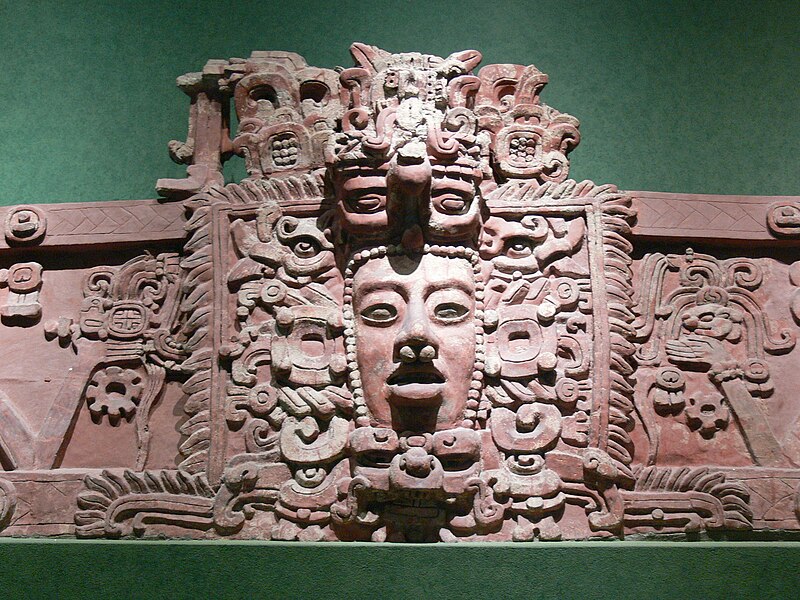
Study reveals trade patterns for crucial substance played key role in Maya collapse

Shifts in exchange patterns provide a new perspective on the fall of inland Maya centers in Mesoamerica approximately 1,000 years ago. This major historical process, sometimes referred to as the "Maya collapse" has puzzled archaeologists, history buffs, and the news media for decades. The new research was published online today in the journal Antiquity.

"Our research strongly suggests that changing patterns of trade were instrumental in prompting the 'Maya collapse,'" said Gary Feinman, curator of anthropology at The Field Museum, which collaborated with the University of Illinois at Chicago on the study.

The new research casts doubt on the idea that climate change was the sole or principal cause, Feinman said, noting that some Maya centers, which flourished after the collapse, were located in the driest parts of the Maya region. Feinman said that climate change, along with breakdowns in leadership, warfare, and other factors, contributed to the collapse, but the shifting exchange networks may have been a key factor.

For the Maya, who did not have metal tools, obsidian (or volcanic glass) was highly valued because of its sharp edges for use as cutting instruments. Maya lords and other elites derived power from controlling access to obsidian, which could be traded for important goods or sent as gifts to foster important relationships with other Mayan leaders.

The Field Museum researchers found that prior to the fall of the Maya inland centers, obsidian tended to flow along inland riverine networks. But over time, this material began to be transported through coastal trade networks instead, with a corresponding increase in coastal centers' prominence as inland centers declined.

The shift in trade might have involved more than obsidian. Field researcher Mark Golitko said, "The implication is that other valuable goods important to these inland centers were also slowly being cut off." Golitko led the Social Network Analysis that graphically depicts the change in trade patterns.

Researchers compiled information on obsidian collected at Maya sites, and used chemical analysis to identify the source(s) that produced obsidian found through archaeological studies at each location. Obsidian from three sources in Guatemala and several sources in central Mexico and Honduras were identified. The researchers generated data for each of four time periods: Classic (approximately 250-800 AD),

Terminal classic (approximately 800-1050 AD), Early Postclassic (approximately 1050-1300 AD), and Late Postclassic (approximately 1300-1520AD). Using Social Network Analysis (SNA) software, the researchers developed maps illustrating which sites had the same or similar percentages of each type of obsidian, in each of the four time periods. These percentages were then utilized to infer the likely network structure through which obsidian was transported

A comparison of the resulting SNA maps show that Classic period networks were located in inland, lowland areas along rivers, mostly in what is today the northern part of Guatemala, the Mexican state of Chiapas, the southern Yucatan, and western Belize. However, maps bearing data from later time periods show that inland networks diminished in importance and coastal networks were thriving, in what today is the northern Yucatan and coastal Belize.

The SNA data "is a very visual way to let us infer the general layout of the networks that transported obsidian, and the likely paths it took," Golitko said.

Feinman termed the study results significant. "The use of SNA to display and analyze the obsidian data graphically gives us a new perspective on these data, some of which has been present for years."

The study did not explore the question of why the transport networks began to shift. Feinman said there may have been military animosities that made the inland, river routes less safe or easy to use, and added that during this period the seagoing transport may have become more efficient with larger canoes. He noted that scientists simply don't have the definitive answers to some of these questions.

Does this study provide lessons for modern-day civilizations? Not directly, Golitko said. However, he believes it does suggest that major impacts follow when large-scale social and economic networks or communication channels break down. The consequences of the breakdown of obsidian supply to parts of the Maya region, he said, is a lesson for the increasingly connected world in which we live today.
###

The Field Museum gratefully acknowledges the National Science Foundation for its generous support to this research project.

Article Source: Eurekalert.com
Research Source:
Contact: Nancy O'Shea
noshea@fieldmuseum.org
312-665-7103
Field Museum

Tuesday, May 15, 2012

SRAC is looking for items for a tag sale

Call it a late spring cleaning - or call it just a good thing to do for your community!  SRAC is looking for donations of items large and small for an outdoor tag sale o take place on Thursday, June 14th, with a rain date of Friday, June 15th.

 So now you have incentive to clean out your attic, cellar and garage !
You can do it for a great cause!

...We will also be doing another tag sale/auction later this summer too.

SRAC is dedicated to education, research and preservation of the region's archaeological and historical assets for the communities within the Twin Tier Region of Southeastern NY and Northeastern PA.

SRAC is located at 345 Broad Street in Waverly, NY and committed to ensuring the collections left to the Center will remain safe, stay local, and be recognized as the collection of the donator for all time. SRAC is a charitable organization , (501c3) and cash and non cash donations may be deductible for the year in which they were donated. To learn more, visit http://www.sracenter.org/Donations/

Contact all Deb Twigg at dtwigg@sracenter.org or 607-727-3111 for more information!


A Continental Soldier Story under Gen. Washington, June 5th


A Continental Soldier Under George Washington
Tuesday,  June 5th,  6:30pm – 7:30pm at SRAC,
345 Broad Street Waverly, NY

George Cummings will present “A Day in the Life of a Continental Soldier Under George Washington” – Cummings is a Windsor historian with the main focus on the Sullivan-Clinton Campaign. He will present this hands on presentation in a Continental soldier uniform and have two large tables of authentic accouterments on display.

An admission donation of $6 for adults, $4 for SRAC members (free admission for students!) is requested. Free admission to the SRAC exhibit hall is included in this donation. For more information, visit www.SRACenter.org , email info@SRAcenter.org, or call the Center at 607-565-7960.

Monday, May 14, 2012

Gerry and Linda Corbin Donate Fossils to SRAC

Sayre native Gerry Corbin with fossils he recently donated
(WAVERLY, NY) The Susquehanna River Archaeological Center (SRAC) reports that Sayre natives Gerry and Linda Corbin recently donated two fossils to add to their ever growing exhibit of fossils and sea life.

One of the donations is a fossilized fish embedded in limestone. These herring-like fish flourished during Eocene time, about 50 million years ago, in three vast freshwater lakes. They are unusually well preserved in laminated limestone precipitated from calcium-rich waters. The limestone is interbedded with many thin layers of volcanic ash and mudstone.

The second fossil is much more rare and is of a well-preserved example of an Inadunate Cladid crinoid known as Cyathocrinites (Family Cyathocrinitidae). Its serially branching arms formed a most effective basket for filtering out the minute particles upon which it fed. This one has an attached stem, making it a more desirable example than many seen. Crinoids are a group of sea creatures that are still alive today. The majority of crinoids attach themselves to the sea-floor, and have a long, flexible 'stem', with a crown of tentacles at the top. Although crinoids look like plants (which is why they are also known as sea-lilies), they are animals that feed on tiny creatures (plankton). It lived around 350 million years ago in the geological time period known as the Lower Mississippian Osagean Stage.

Fossil (Cyathocrinites) donated to SRAC
The two fossils will be known as the "SRAC/Corbin Collection" and will be on display with a picture of Gerry Corbin for future visitors to enjoy. SRAC is dedicated to education, research and preservation of the region's archaeological and historical assets for the communities within the Twin Tier Region of Southeastern NY and Northeastern PA. To learn more about donating items to SRAC, visit http://www.sracenter.org/Donations/#collection 

SRAC is located at 345 Broad Street in Waverly, NY and committed to ensuring the collections left to the Center will remain safe, stay local, and be recognized as the collection of the donator for all time. SRAC is a charitable organization , (501c3) and cash and non cash donations may be deductible for the year in which they were donated. To learn more, visit http://www.sracenter.org/Donations/